Are Dental X-Rays Safe?

Understanding X-Rays

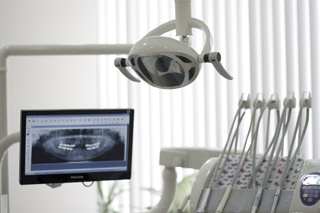
xraysX-rays are one of the most important diagnostic tools at any dentist’s office. Getting your regular x-rays is the only way to be sure that you don’t have any tooth decay that needs to be taken care of.

But, considering the dangers of radiation, are x-rays a worthwhile risk? This is a common concern, so Overlake Dental in Bellevue wants our patients have the important facts they need to feel safe during their normal dental appointments.

“X-rays, also known as radiographs, are an essential part of any dental care treatment plan. They are diagnostic, but they can also be preventative, by helping a dentist diagnose potential oral care issues in a patient’s mouth before they become a major problem. An x-ray is a type of energy that passes through soft tissues and is absorbed by dense tissue. Teeth and bone are very dense, so they absorb X-rays, while X-rays pass more easily through gums and cheeks.

X-rays are divided into two main categories, intraoral and extraoral. Intraoral is an X-ray that is taken inside the mouth. An extraoral X-ray is taken outside of the mouth.

Intraoral X-rays are the most common type of radiograph taken in dentistry. They give a high level of detail of the tooth, bone and supporting tissues of the mouth.”

Colgate

The first thing to realize is that the amount of radiation you are subjected to with modern dental x-ray machines is exceptionally minimal. Advances in x-ray technology allow us to get an effective image of your teeth quickly and efficiently.

Machines operating at a higher speed let us capture a picture with a very short exposure period, and more limited x-ray beams focus the radiation only on where it is needed. Along with the advances in dental technology, you also enjoy the protection lead-lined aprons.

In short, the small amount of radiation that you are exposed to is easily worth the benefits you get from an occasional dental x-ray.

Protecting Your Gums with Perio-Protect in Bellevue

Why Many Dentists and Patients Love Perio-Protect

Gingivitis is a mild to moderate gum infection that if left untreated or poorly managed will lead to its severe form – periodontitis. The condition becomes generally difficult to treat, but can still be managed with surgical and non-surgical means. Surgery is invasive and requires anesthesia and sedation, and antibiotic cover, such as when dentists do bone grafts and bone surgery, soft tissue grafts, and the combination flap surgery/pocket reduction surgery.

The purpose of these procedures is to restore the support tissues destroyed by the disease in its advanced stage. It requires on-going maintenance in as frequent as 6 weeks or so. Controlling the growth and spread of bacteria is the main aim of non-surgical interventions for periodontitis, such as regular teeth cleaning and the deeper approach of scaling and root planing. These procedures also require regular maintenance, typically repeated every 3 months.

Though both surgical and non-surgical means are helpful, chronic periodontal disease continue to plague 47% of adult Americans. If these means are effective, how come periodontitis is still a growing concern? Perhaps our approaches are not as efficient. Comes in a treatment regimen that is more a home-care approach supplementing other treatment plans: the Perio Tray® by Perio Protect. It is a customized tray that is worn by the patient aimed at delivering medication deep into the gums to fight infection.

It’s a daily application of 10 to 15 minutes, at the start is applied 2 to 3 times a day, long enough and frequent enough to fight bacterial communities, preventing them from growing and spreading. The Perio Tray is your at-home bacteria management tool. It is a more comfortable healing experience, suppressing the stubborn symptoms of gum disease without the sensitive or painful side effects of repetitive scaling or even surgery. Daily applications allow the gums to heal.

The Perio Tray has special internal seals that keep the medication from seeping into the mouth. There is pressure within the seal that forces the medicine deep into the tooth pockets. Actually, the tray is an exact replica of your mouth using your own measurements, a comfortable fit. The impression made by your dentist is sent to the lab for fabrication and ready to use when finished.

Perio-Protect by Bellevue Dentist

If you think you might be a good candidate for Perio Protect, set up an appointment this week. Experience the protection of the Perio-Tray and save your gums from the ravages of periodontitis.

Olympians Don’t Have Better Oral Health

Why Olympic Athletes Have More Tooth Decay

Consider Olympic athletes, the superhuman representatives of the sports world, who must have better access to huge health support systems, are actually faring no better than the average American adult in dental care. Many Olympic players have poor oral health. Why so?

A case in point is the 2012 London Olympics, where three-quarters of the athletes have gingivitis. A study was conducted and reported on the impact of of an athlete’s risk factors on his oral health; the results are amazing. A good 30% of athletes had taken facial blows, such as blows to the mouth or jaw. These can result to broken, chipped or cracked teeth, gum and tongue injuries and cracked or dislocated jaws. They are acquired at practice training or during the actual games and dental attention may be nil or not as comprehensive because of the immediate need to compete. Continue reading

Keeping Your Mouth Healthy even when You’re Sick

Tips to Keep Your Mouth Healthy While Sick

Did you ever feel slightly better after brushing our teeth in spite of the fact that you’re sick? It can be psychological but it does make you feel like you’re getting well. When you’re down with the flu or a cold, you ought to still maintain your routine oral care. Here are some tips that can help you on your way to wellness, in body and in the mouth.

Practice proper oral hygiene. Keep your mouth covered when you sneeze or cough. And keep your hands clean. You can transfer germs to things and places and people around you. You are certainly not sharing your toothbrush but make sure they are also clean. If the brush is more than 3 months old, it is high time to change it. Of course, continue brushing and flossing, have mouthwashes if need be for they refresh the mouth.

Avoid sugary foods and drinks. Know that sugar clings to teeth and bacteria love to colonize them, leading to decay and cavities. Choose sugar-free cough candies. Don’t keep sweets in your mouth for too long, like sucking on them. Stay away from sodas and acidic juices, like lemon. Plain water is your better and best friend during these times, or have tea without the sugar. Stay hydrated with water as some meds you might be taking are causing dry mouth, a condition that attracts bacterial growth.

Does your illness cause you to vomit? Stomach acids can cling to teeth and weaken your enamel. Do not brush right away. Brushing too soon will just spread the acid all over the tooth surfaces. Instead, take water, swish it around your mouth and spit. Or you can use water with one teaspoon of baking soda and do the same. Baking soda washes away the acid. Then you can brush and floss, 30 minutes later.

Healthy Mouth at all Times

Know more about oral care and oral health from Dr. Yung, your Bellevue dentist. Remember, there is no reason to neglect your dental health even if you’re body is down and sick.

Bellevue Dentist: Know about Dental Sedation for Kids

Parents’ Role in Dental Sedation for Children

Is your child up for a surgical procedure at the dentist’s clinic and requiring anesthesia? Your child’s safety and well-being are your topmost concerns. While the dentist can assure you a safe procedure, you can help reduce the risks and the stress for your child before, during and after the treatment.

Firstly, know the sedation options your dentist will use. There are three: oral sedation, nitrous oxide, and intravenous injection. Oral sedation is by mouth or through the nose, taking up to 20 minutes to work. It will not put the child to sleep, but it helps him stay calm and relaxed. Nitrous oxide, or laughing gas, is delivered by mask and the child relaxes within five minutes and goes to sleep. Intravenous sedation is delivered via a needle inserted into the child’s vein at the back of his hand, though nitrous oxide may be given first to make the patient sleep before the injection.

A few things first before you bring your child to the clinic. Prepare your child for the procedure by restricting his food and liquid intake as sedation poses the risk of vomiting stomach contents or inhaling them into the lungs. Loose-fitting clothes allow attaching of monitors easily and without fuss. Of course, a full dental and medical history of the patient must be disclosed by parents, including any past or current medications. At the dentist’s, blood oxygen level, blood pressure, temperature and heart rate are closely monitored.

You can keep your child calm and preoccupied by bringing along a favorite toy or book, hold his hand or give gentle reassurances. Your attention is fully focused on the child. Especially when he wakes up after the sedation, he sees you first and gets positive reassurances again. He can still be confused or fussy and may feel nauseous. For the first few hours, he may be disoriented or sleepy and definitely need not engage in school or play for the day. Soft foods are recommended for a few days. Any fever, bleeding or pain experiences must be reported to the dentist at once.

Safe and No-Fuss Anesthesia for Kids by Bellevue Dentist

Overlake Dental is your child-friendly dental practice in Bellevue. Our long and esteemed history in pediatric dental treatment centers on the safety and well-being of children in our care. We work hand-in-hand with parents in all facets of dental treatment, especially surgery and sedation for kids.